
A Beautiful Mess
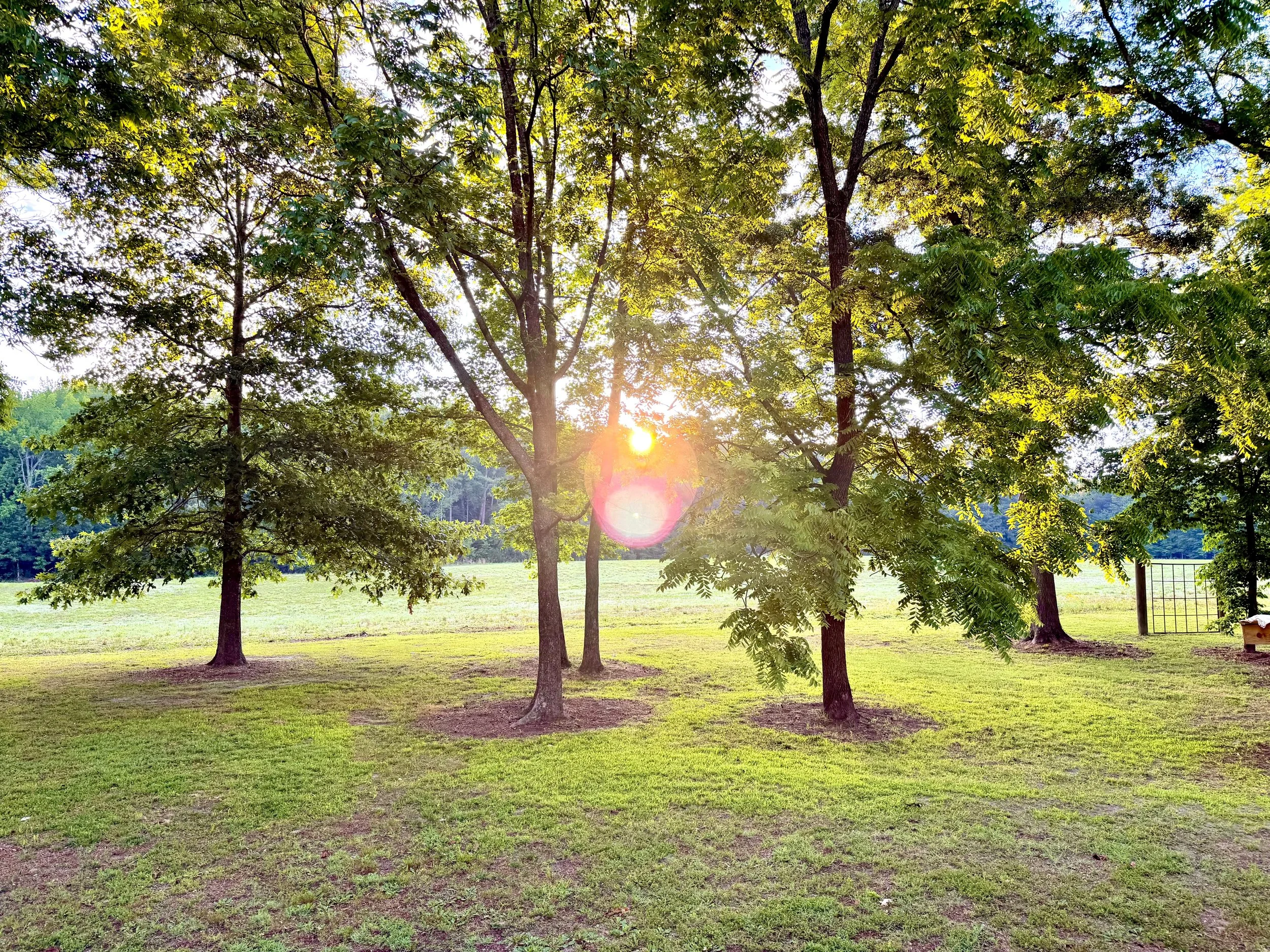
Solstice sunrise, Gloucester Courthouse, VA
I did something I rarely do this morning. I set an alarm to get up and watch the sunrise. Part of me was tempted to find the exact right spot to stand and take in the maximum beauty of the morning, or capture the perfect photo so I could keep this experience with me, like a firefly in a jar. But then came a quiet shift. I exhaled, relaxed the tension in my body, and just sat with this moment. I traded the promise of a perfect memory so that I could be fully present in the magnificent but all too temporary experience of this celebration of nature.
Today marks the summer solstice, the first day of summer and the longest day of the year. It's a day of paradox, where we celebrate the abundance of life and growth and light, knowing that beyond here the darkness starts to increase. It's a time of both joyful abundance and aching loss. You might think that these conflicting feelings shouldn’t coexist, but in fact they must. Duality is the stuff of life.
Sometimes clients are my greatest teachers. I had a young woman explain a crucial moment of insight to me about five years ago, and what she said was so simple, so true, and so elegant that I think about it every day. She said, “I know my life is a mess, but it's a beautiful mess.” This kernel of spontaneous wisdom has remained with me over the years, and I think that's one of the best messages I can send out on this day that celebrates both light and dark, both grief and gratitude. The truth is, it’s not only acceptable to hold these conflicting feelings, that mess is an essential part of being human.
Those times when there’s that quiet admission you would only make in a therapist’s office that you were relieved when a loved one passed away. Yes, for the ending of their suffering, but also for the resolution on your side that comes with that ending. Or the gratitude and aching beauty that comes from knowing that the ending is part of the journey, and that the journey is the entire point. Nobody says this part out loud; for fear, for shame, for believing this makes them a selfish person. There is some sort of societal taboo imposed on this, the gatekeeping around how to “grieve correctly”, but I’ve seen it time and time again and it is such a natural part of the process of healing and integrating these experiences into your own journey.
This experience can show itself in quieter ways as well. You may find yourself moving into a wonderful, healthy, loving relationship with a parent or an adult child, while still grieving what feels like wasted time or a problematic history and the version of your relationship you thought should have existed before now. But, in nature, nothing is wasted. Not time, not energy, not creativity. Endings are just passageways to the next adventure. Life returns to the soil to create more life.
It’s also possible to both celebrate the authenticity of your differentness in the way you move through the world, the unique ways you live and love, while also holding sadness for the ways the world can reject that authenticity. There’s always room for both, there is actually room for all of it.
Walt Whitman said it well in his poem Song of Myself;
“Do I contradict myself?
Very well then I contradict myself,
(I am large, I contain multitudes.)”
We must make room for our multitudes. The mess of life isn't something to be avoided, tidied, or swept under the rug. The mess is the whole point. The mess is where creativity and love and joy and abundance grow from. The mess is where you learn. The mess is real, perfection is a myth, and life is wonderfully broken. But in the Kintsugii tradition of repairing shattered pottery with gold, the Japanese were on to something. They understood that beauty is in the broken places. In fact, the most concentrated strength is in the rejoining of those shattered pieces. The reassembled version of yourself is a one of a kind creation to be admired and celebrated. And you can’t live your fullest expression while carefully placed on a shelf out of fear of breaking. Living is taking risks, falling, shattering, and reassembling stronger and more beautiful.
So, on this longest day of the year, you can celebrate the warmth of the sun while also grieving the exquisite but temporary beauty of this moment. Being fully present in these experiences is so affirming and so crucial. If we put our energy into the fear of losing them, we're going to miss them altogether, and that would be the real loss.
Go outside today, this longest day of the year. Dance in the sun rays. Be fully present.
Be a beautiful mess.
